Three guitars, one big sound
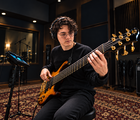
Nathan Bredeson is a dynamic Ottawa-based guitarist known for his expressive playing, genre-crossing versatility and work with the Ottawa Guitar Trio. Blending classical precision with contemporary flair, his performances move effortlessly from baroque masterpieces to video game soundtracks like Super Mario Bros. and modern pop arrangements including film score arrangements like Star Wars. How cool!
With a passion for collaboration and reimagining familiar music in unexpected ways, Nathan brings both technical mastery and a fresh creative voice to every stage! Cath their show “From Zelda to Bach” on Friday, April 10, 2026 from 6-9pm call The Cove Inn at 613-273-3636 for reservations. Kids under 12 years old, free! Details and reservations here.
Seamus Cowan: Your trio blends everything from Bach to video game music—what connects these seemingly different worlds for you? Looking past style, what musical “DNA” do you hear that makes those pieces feel like they belong together?
Nathan Bredeson: To summarize in a word, Tradition. To summarize in a few more: while what we do may seem like a novel idea, we are really just doing what musicians have been doing for a few hundred years.
You can trace the lineage of video game and film music all the way back to the earliest operas at the turn of the 16th century. For centuries composers have toyed with blending music and narrative, where musical moments occur specifically to depict events in the story. This fusion reached an extreme in the mid-19th century with works like the epic operas of Richard Wagner and sweeping symphonies of Richard Strauss, where the structure of the story became the structure of the music. So it was only natural during the Golden Age of Hollywood that film composers would look to these masters of narrative music for inspiration when scoring the first blockbusters, and you can hear echoes of the musical language in their soundtracks. For example, in Star Wars you can hear John Williams pulling inspiration from composers like Debussy, Wagner, Tchaikovsky, and Stravinsky. Without these giants of the past we wouldn’t have the film music we all love.
Performing and arranging this music has a similarly long tradition. Before recorded media the only way to enjoy music at home was to play it yourself; almost every middle-class household owned a piano or a guitar. There was an enormous market for arrangements of popular tunes from operas and symphonies for the casual player to enjoy, and performers would often arrange “potpourris:” virtuosic medleys of popular show tunes. We aren’t even the first ones to do it on guitar–Mauro Giuliani arranged his Rossinianas in the 1820s! This tradition carried into the 20th century with the collection of jazz standards known as the “Great American Songbook,” many of which are songs pulled from popular musicals of the early 20th century. There is currently a growing movement among musicians to canonize a “New American Songbook,” consisting of universally known tunes from popular video game series, such as Mario and The Legend of Zelda.
The landscape is still evolving, but we are perpetuating a tradition that has been around as long as the works of Shakespeare and contextualizing it with the media of our generation. Can you tell I spend a lot of time reading about this stuff?
Q: When you’re arranging a well-known piece for three guitars, how do you decide what to preserve and what to reinvent? Is there ever a moment where you intentionally “break” the original to make something more exciting?
Nathan: As a general rule we like to keep things as close to the original as possible but there’s many instances where that simply isn’t possible. Some pieces simply have too many moving parts for three guitars to handle or some pieces have moments that would bring out the guitar's weaknesses such as our lack of sustain or lack of volume.
In those moments we always try to prioritize keeping the composer’s intention first and foremost. For example, we might choose to change an arpeggiated accompaniment into strumming to maintain the high intensity of the moment. Another example would be to repeat certain notes in order to create an illusion of sustain. We also have a few medleys which usually involve some original composing on our end to link the movements together. For example, in our Zelda: Ocarina of Time suite, François took quite a bit of liberty with the harmony and rewrote some material in between movements while keeping the main melodies intact within each movement.
Q: Live performance is such a big part of your group’s identity. What’s a subtle detail in your playing or stage interaction that audiences might not notice, but you think makes a huge difference?
Nathan:That’s a great question, since subtle non-verbal cues almost make up the bulk of what’s happening when we perform!
Most of the timing and dynamic choices are premeditated during rehearsal in order for us to produce a really cohesive narrative, but every play-through is unique. It can be a little lean forward of the head to push the tempo or intensify the sound, or a little breath to indicate that we’ll really milk the ending of a musical phrase. We even know each member’s unique way of cueing so that our playing stays tight at the start and end of each passage. A little eyebrow twitch or a big head bob each indicate something completely different!
It’s actually something we get a lot of comments about after a show, it seems nearly everyone picks up on the fact that there’s a lot being said while we’re playing. In all honesty, it’s stuff that now comes very naturally thanks to almost a decade of playing together!
Q: If you could collaborate with a composer from any era for one performance, who would it be and what would you want to challenge them on musically? What do you think they’d find surprising about modern audiences?
Nathan: We had fun talking this one over as a group and the name that we all settled on was the Paraguayan composer, arranger and performer Agustin Barrios (1885-1944). Barrios is a household name in the guitar world, and wrote several of the staple works in the solo guitar repertoire (you will hear me play one of them during my short solo set on the 10th!). Barrios intrinsically understood how to play to the strengths of the guitar in his writing (idiomatic writing, taking advantage of the guitar’s resonance, etc), but he mostly wrote solo pieces; his output for more than one guitar only amounted to a few duets. So we would have loved to be able to play some of our arrangements for him and then challenge him to write what would probably be the best guitar trio ever written (both in terms of musical content and mastery of the instrument)!
Barrios was a savvy entrepreneur, and he understood that marketing was an important part of any successful artist’s career. He used to dress up in traditional indigenous garb and performed under the alias “Nitsuga Mangoré, claiming that he was a prodigy virtuoso discovered deep in the jungles of Paraguay. With a theatrical flair like that, I think he would be surprised by how conservatively most classical musicians and audiences dress now, but I’m sure he would like our shirts!
Posted: Apr 1, 2026